Why an Adjusting Instrument Exists in the Room at All
For the youngest, oldest, most fragile patients, and sensitive areas, hands aren't always the right tool.
September 16, 2026 · 3 min read
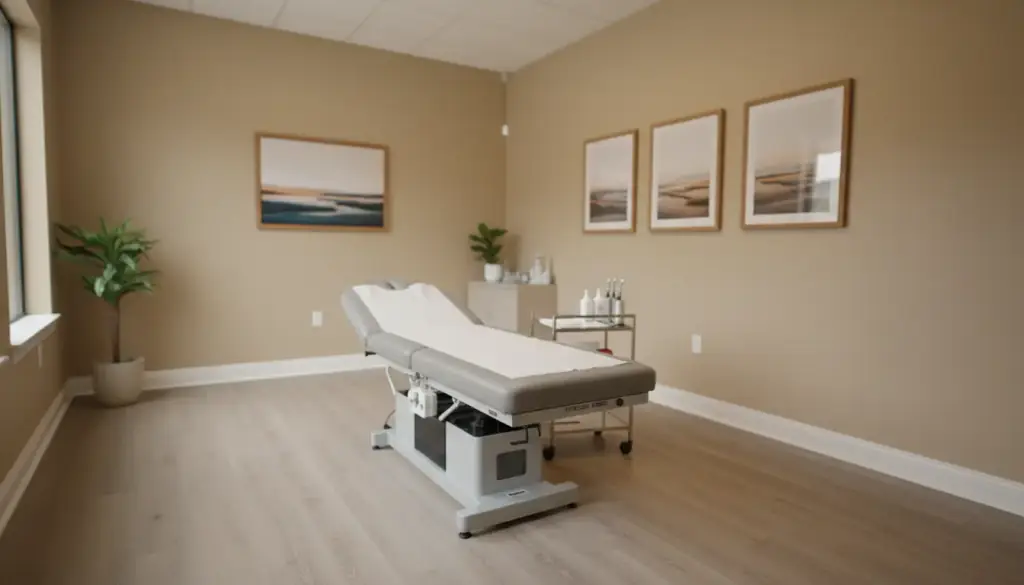
Picture a treatment room and most people picture hands doing the work. A handheld adjusting instrument is also part of the room, and it isn't a backup plan or a lesser version of a manual adjustment. It's the right tool for a specific set of patients and a specific set of areas, used deliberately rather than as a substitute.
What the instrument actually does
An adjusting instrument delivers a controlled, precise impulse to a joint, in place of a hands-on, high-velocity adjustment. It lets the doctor target a specific spot with a consistent, gentle amount of force, rather than relying on manual pressure and body positioning the way a hands-on adjustment does. The underlying goal, moving a joint that isn't moving the way it should, is the same. The method of getting there is different.
Who it's actually for
The instrument comes out for sensitive patients and for sensitive areas of the body. That covers more ground than it sounds like. A young child's spine isn't a smaller version of an adult's, and it doesn't need adult-level force applied to it. An older patient, or anyone with more fragile bones or joints, benefits from the same precision without the same intensity. And certain areas of the spine, upper neck in particular, are simply more sensitive regardless of the patient's age, which makes a controlled instrument a sensible choice there even for someone who'd otherwise be adjusted by hand elsewhere.
None of this means the instrument replaces hands-on work across the board. For a lot of complaints, especially longstanding back pain in an otherwise healthy adult, a hands-on high-velocity adjustment is still the more direct route. The instrument exists as a genuine alternative for the situations where that route isn't the right one, not as a universal upgrade or a universal downgrade from manual technique.
A few concrete examples
- A child brought in for a sports injury might be adjusted with the instrument rather than by hand.
- An older patient dealing with neck pain may be treated the same way, for the same reason.
- A sensitive area of the spine can be worked with the instrument even during a visit that otherwise involves hands-on techniques elsewhere.
- Anyone who's simply more comfortable with a gentler, more controlled method can ask for it directly.
That last point matters more than it might seem. The instrument isn't reserved only for patients who are visibly frail. It's a legitimate option for anyone who'd rather have a joint worked with a precise, gentle impulse than a hands-on adjustment, whether that's a specific worry about a specific area or simply a preference. Diversified treatment means the choice exists in the first place.
What this looks like in practice
In an actual appointment, the instrument might be used on its own, or alongside hands-on work and soft tissue treatment in the same visit, depending on what the doctor finds. Nothing about using it means less is being done. It means the technique was matched to the joint and the patient in front of the doctor that day, which is the same principle behind diversified treatment generally, applied to one specific tool.
It's not only about age
It's easy to assume the instrument is mainly for children and the elderly, and while that's true as far as it goes, it undersells how often it's actually the right call. Extremity pain in a shoulder, wrist or ankle often involves smaller, more delicate joints than the spine, where an instrument's precision matters more than a hands-on adjustment's range of motion. Numbness that traces back to a specific, localized nerve compression can also be a case where a targeted instrument impulse makes more sense than a broader manual adjustment. The deciding factor is always the joint and the complaint in front of the doctor, not a rule about who does and doesn't qualify.
Dr. Jack Treloar and Dr. Erik Walley have worked out of the same Eaton Rapids Rd. office in Lansing since 2005, treating back pain, neck pain, extremity pain, numbness, disc injuries, sports injuries, workplace injuries and auto injuries. If you'd rather be adjusted with an instrument than by hand, for any reason, say so when you call to book at (517) 699-0909. It's a normal request, not an unusual one.
Delhi Chiropractic, (517) 699-0909
Call (517) 699-0909More articles
What the Crack Actually Is, and Why It Doesn't Change the Outcome
The sound gets more attention than anything else that happens in the room, so here's what it actually is.
Why 'Diversified' Means Your Back Doesn't Get Somebody Else's Treatment
One name, several distinct methods, chosen for the person on the table rather than applied to everyone the same way.